Monday, April 27, 2026

Leon Bridges, FAIA Faithful Servant and Fghting Lion.

Baltimore AIA reported on a Monday in April that longtime Baltimore architect and Fellow of the American Institute of Architects had died. Today I attended his memorial service.

Leon Bridges was born on August 18, 1932 in Los Angeles, California. In 1952 he was drafted to the military and stationed in Japan. He earned his architecture degree from the University of Washington in 1960 and worked initially in Seattle. He came to Baltimore in 1972. He was the first registered African American architect in Maryland. 

Leon Bridges, FAIA speaking about HarborPlace in 2024

He received many awards in his lifetime including a Citation for Excellence in Community Architecture and was in 1972 the first Black architect to have received a national award from the American Institute of Architects. All his life he worked hard for the advancement of architects of color. “I have a lot to say and I can speak at length“ he said even after he was 90. 

He had his own practice first in Seattle and then here.  His office was next to mine for some years. After semi retiring from it he became an adjunct professor at the Morgan State architecture department where he tought until not too long ago and invited me at times to be a visiting studio critic. He stayed involved as a critical commentator on local politics, for example as a critic of the planned HarborPlace development about which he spoke in the basement of the same church he was now eulogized. 

Leon was a local and national giant in architecture and urban design and will remembered fondly as many of today’s accolades illustrated. We will miss his, even in high age, forceful and critical voice. Leon was never shy to share his opinion and always strived for improvement. A good faithful servant, the pastor said, stressing that GFS was more important than the other letters behind Leon’s name (FAIA, NOMA). Three years ago at a talk he gave at Morgan State on occasion on some honorary award, he stated, I am still here, I have a lot to say, I could talk forever. He noted that he wanted to be alive to see his grandson graduate. He didn't quite make it. Now this grandson spoke and sang powerfully at his funeral.

So there he lay in his bow-tie and suit looking good and  tolerated whatever occurred in his honor until the coffin was closed and he was carried  into the hearse while the mourners, naturally many architects among them, took a deep breath after contemplating mortality and possible deliverance and the question what survivors would have to say about them. Relieved they streamed into the spring sunshine counting the blessing that they could still walk on their own. From what the pastor had said, at various hospital visits in recent months Leon had told God that he needed more time and he walked out of the hospital under his own power. No doubt, he would have enjoyed this lovely day as well and loved to shake hands with his many friends and acquaintances who assembled in front of the Douglas Memorial Community Church for a chat.

Klaus Philipsen, FAIA

Sunday, April 19, 2026

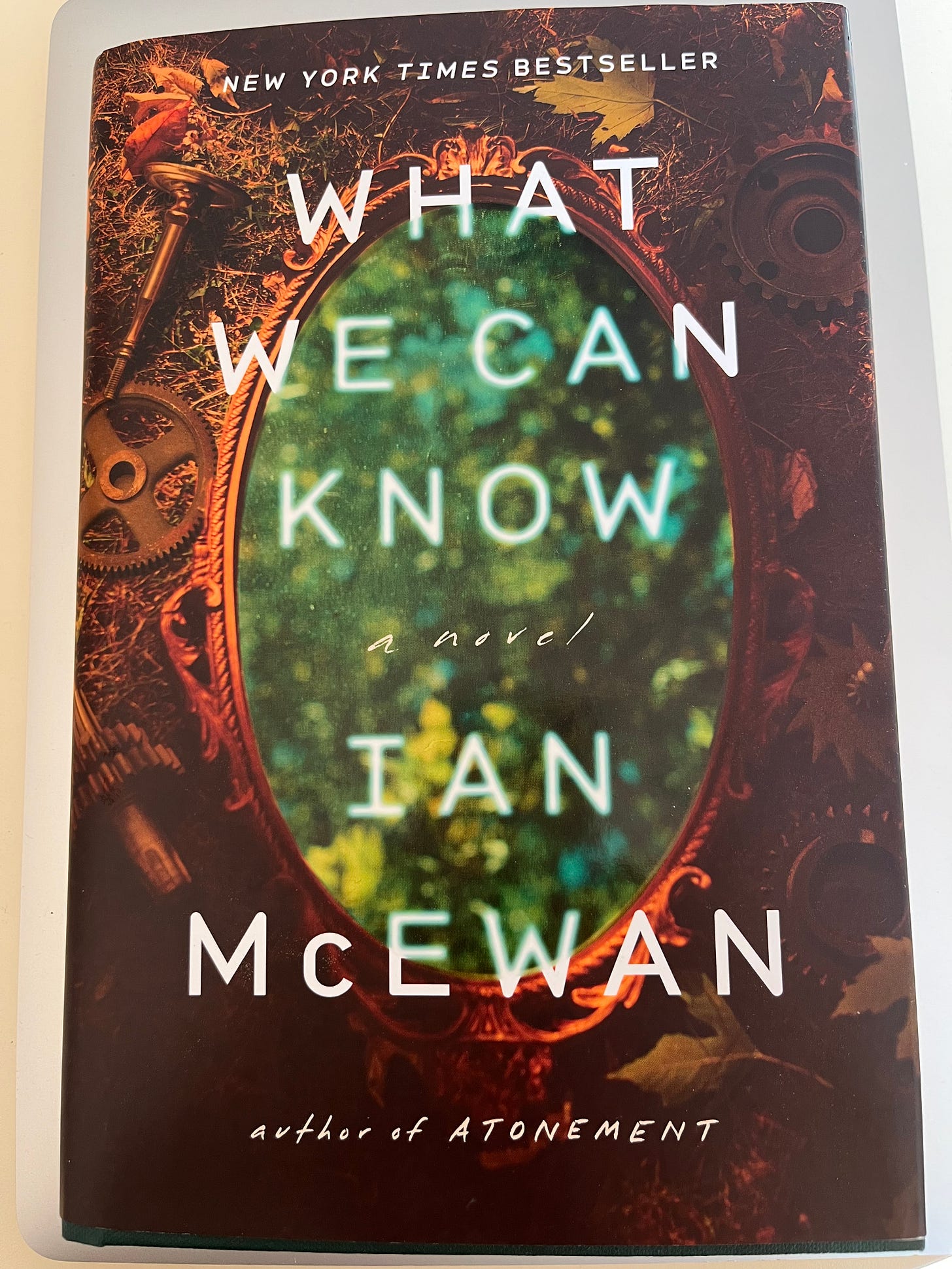
Book Review- Ian McEwan: What We Can Know

Nobody asked for my review but as a disappointed fan of the author, I have to express my sentiment: I am reading Ian McEwan’s latest book “What we can know” because I read and liked several of his previous books for their sensibilities for the time we live in, his precise and artful language and his detailed introspection.

But this story, set 100 years from now in a dystopian future, lacks a stable narrative arc strong enough to jump back and forth across a hundred years and keep the reader engaged.

The author’s as well as the narrator’s literary research interest, already feeling old fashioned in the contemporary setting, appears outright tedious in the apocalyptic future in which it is supposed to take place. Most gravely though, McEwan lacks the imagination to paint out a future so many decades ahead, dystopian or otherwise.

He stays in the lanes familiar to us. Surely they wouldn’t research via an internet or ask AI similarly to we do now, wouldn’t speak, react and aspire in the same words or sentiments as we do. He allows that the various catastrophic events between now and then have slowed technological progress, but that’s no excuse for not imagining any real change for how people live, love, or get around except the the electric boats mentioned several times.

There probably wouldn’t be libraries with actual physical antique books, at least not for the public to go to. His descriptions of the various catastrophic events that had occurred remain bloodless and contrived, except for an Iran war that jumped from his imagination to relaity right after the book was published.

I have the strong impression that the author himself felt his inability to fill this distant future with juice and color, and so he keeps getting back to the here and now, presumably reconstructed from archival material.

But as much as it is supposedly reconstructed from research and much effort, this 100 ago time comes across with the fullness of the contemporary observer which the author of course is.

His future is what remains the abstract and lifeless construct distilled from research, quite backwards from the story’s premise and suffering from not enough research.

“What we can know” is not much, at least when we talk about a future 100 years from now, except that the title refers to the ability to know everything about us, thanks to our obsession to record everything.

McEwan doesn’t allow for the possibility that our everyday digital recordings are too ephemeral and too subjected to specific technology and software to endure for research over a 100 years.

Isn’t it much more likely that future generations not only would care even less about us than we care about the past but that our time actually leaves fewer useable traces?

I have not yet finished the book because my nagging complaints recur chapter by chapter and it is unlikely that this will change during in the final stretch. But I am not one to give up easily, so will pick it up again searching for the raisins of McEwans beautiful language and introspections which remain an attraction even in a weak plot.

Klaus Philipsen, FAIA

Friday, January 2, 2026

Jörg Aldinger, begabter Architekt und Freund stirbt an Krebs im Alter von 70 Jahren

 Am zweiten Weihnachtstag erhielt ich die Nachricht, dass mein Freund von 43 Jahren, Jörg Aldinger, an einem Hirntumor gestorben ist, einer Erkrankung, mit der er etwas mehr als ein Jahr lang durch Phasen des Optimismus, der Resignation und der Akzeptanz zu kämpfen hatte.

Joerg Aldinger, 2017 in Berlin (Photo: Philipsen)

Er verbrachte seine letzten Monate in der Hospizpflege, wissend, dass der Tod nahe und unvermeidlich war. Seine Frau Irmgard war so weit wie möglich an seiner Seite, der jüngste Sohn get noch aufs Gymnasium und ihr eigenes Büro erfordert ebenfalls Aufmerksamkeit. Die erwachsenen Kinder seiner ersten Ehe und viele Freunde begleiteten ihn durch das Jahr, das auch eine letzte Reise nach Skandinavien Ende August beinhaltete. Er schrieb "zauberhaft für unsere Familie, wieder zu reisen. Voller Eindrücke und überglücklich".

Jörg war in erster Linie ein Freund, ein Kollege, mein Chef für eine Weile und einer meiner verbleibenden Kontakte in die alte Heimatstadt Stuttgart. Bei einem Glas Wein auf der Route 66 in Pasadena, Kalifornien und als Zeichen der Zuneigung zitierte er einmal Humphrey Bogarts letzte Worte im Film Casablanca, in dem er sich auf eine große Freundschaft bezog.

Freunde wie Jörg sind selten und er behält einen Platz in meinem Herzen wegen seiner unerschütterlichen Freundlichkeit, seiner vielseitigen Interessen und der vielen Ebenen unserer Beziehung. Er war großartig, als er mich in einer für mich sehr schwierigen Zeit beschäftigte, er war großartig, als ich sein Haus besuchte oder als wir uns zum Mittagessen trafen, nur wir beide oder er und seine Frau oder mit meinem Vater, den er problemlos in die Kommunikation miteinbezog. Wir haben ein paar Mal bei La Piazza, "dem Italianer" im Stuttgarter Komplex gegessen, der vom Architekten Gutbrod entworfen wurde. Er besuchte mich in den USA und wir trafen uns auch in Berlin, wo er eine Wohnung im Corbusier Haus als Zweitwohnsitz renovierte. Ich kannte ihn als Ehemann und Vater von vier Kindern in seiner ersten Ehe in seinem ersten Haus, das er natürlich selbst entworfen hatte. Später in seiner zweiten Ehe mit Irmgard hatte er die perfekte Partnerin gefunden. Sie hatten beide den Johannes.

Ich arbeitete für ihn, als sein Vater das Vorstadtbüro als Miteigentümer an ihn übergab. Unser Transformationsprojekt war ein großer zweistöckiger Showroom für Möbel Behr, der in Wendlingen seinen Stammsitz hat. Dann auch noch Sozialwohnungsprojekt. Beide hatte er entworfen und ich Ich war Projektmanager. Er gab mir so viel Freiheit, dass ich mich wie ein echter Partner fühlte. Diese Zusammenarbeit endete mit meiner Auswanderung in die USA. Allmählich hat sich die Firma von dem lokal gut vernetzten soliden schwäbischen Architekturbüro der Feuerwachen, Schulen und Rathäuser zu einem designorientierten Studio entwickelt, das durch Wettbewerbe jobs bekam. Er verlegte das Büro nach Stuttgart in die ehemalige Arztpraxis des Vaters seiner ersten Frau. Jörg stieg nicht nur in die Stuttgarter Architektenclique ein, sondern wurde auch Dekan für Architektur an der Hochschule in Biberach, wo er mich einmal als Studiokritiker einlud und um eine einen Vorlesung zu halten.

Er blieb stets neugierig und offen. Für ein Jahr oder so war er Gastdozent an der California State Polytechnic University in LA. Seine Fähigkeit, das Büro durch den Sturm zu führen seiner Scheidung zu führen ihn zwang, neu anzufangen, Erfolg trotz Auslandsaufenthalt aufrechtzuerhalten und trotz der Tätigkeit an der Hochschule, beruhte auf seinem Vertrauen in seine Mitarbeiter, das ihm das Delegieren von Aufgaben ermöglichte, und beruhte auf seiner Fähigkeit sich auf das zu konzentrieren, was wesentlich war. Sein Büro erhielt viele Architekturpreise. Er war ein gefragter Fachpreisrichter für Architektenwettbewerbe in ganz Deutschland, was wiederum dazu führte, dass er in mehreren deutschen Städten für Gestaltungsbeiräte nominiert wurde. UnsereBeziehung hatte viele Facetten: Mein Sohn verbrachte einen Sommer als Praktikant in seiner Firma in Stuttgart, mein Bruder arbeitete mit ihm an Wettbewerben in seiner Heimatstadt Herrenberg zusammen und mein Vetter lud ihn ein, an seiner Architekturschule in der Nähe von Bonn zu sprechen. Im Jahr 2016 haben wir uns gemeinsam an einem deutsch-amerikanischen Projekt versucht, einer High School auf dem Luftwaffenstützpunkt Spangdahlem in Deutschland, bei dem mein Büro ein wenig zu den Einrichtungs- und Möbelkonzepten beigetragen hat. Mein einziges transatlantisches Projekt.

Obwohl Jörg fünf Jahre jünger war als ich, schaute ich zu ihm auf, wegen seiner Fähigkeit, Ideen zu skizzieren, seiner überlegenen Designfähigkeiten und seines tadellosen Geschmacks in Mode, Architektur, Möbeln und Essen. Überdies war er sehr musikalisch. Jahrelang schickte er kunstvolle, selbst entworfene Weihnachtskarten. In seiner ersten Ehe ging es manchmal ein wenig elitär zu. Dies ließ aber im Laufe der Jahre nach und wurde sowieso immer durch eine fortschrittliche Sicht auf Gesellschaft, Technologie, seinen offenen Geist und seine Toleranz ausgeglichen. Die meisten seiner Projekte hatten eine soziale Funktion und waren umweltbewusst, insbesondere durch sein besonderes Interesse an Holzbau. Wir waren uns einig über Werte und Politik.

Sein Designansatz für sein 2007er Projekt der Hospizpflegeeinrichtung St. Martin (in das er selbst am Ende seiner Lebensreise verlegt wurde) war nachdenklich und humanistisch wie er einplante was ein unheilbar kranker Gast brauchen würde. 

In einem Nachruf, der diese Woche im überregionalen Teil der Stuttgarter Zeitung gedruckt wurde, wurde er in der Überschrift als "Vermittler und Menschenfreund" beschrieben. Sein Impuls für gutes Design war nicht elitär, sondern motiviert vom menschlichen Bedürfnis nach Schutz und einer Umgebung, die sich auf den menschlichen Dialog einläßt, nicht durch populäre Dekoration, sondern auf der Grundlage von Funktion, Raum, Material, Beleuchtung, der Essenz von Architektur eben. Die vielen Gebäude, die er entworfen hat, sind nicht an einer bestimmten "Handschrift" zu erkennen, sondern sie ergeben aus ihrem Standort und den Bedürfnissen des Programms. Sie teilen eine gewisse Strenge und etwas Minimalismus, die ihre Wurzeln in der Moderne haben, aber wurden nie zu den kalten isolierten Objekten, die der Moderne einen schlechten Ruf verliehen.

Sein Leidensjahr beendete riss in jäh aus seiner Produktivität, die seine Büropartner ohne Spiritus-Rektor, der er blieb, selbst als das Büro größer geworden war, nun irgendwie aufrechterhalten müssen.

In seiner Neujahrsbotschaft von 2024 schrieb er mir: "Freundschaften sind wichtig, sie geben uns Festpunkte und vermitteln das Gefühl von Vertrautheit und Sicherheit. Für mich ist das mit uns beiden i, wir sehen uns fast nicht, sind aber in meiner Wahrnehmung nicht weit entfernt." Ich vermisse dich sehr, mein lieber Freund!

Klaus Philipsen, FAIA

Thursday, January 1, 2026

Joerg Aldinger, talented architect and friend dies of brain cancer at age 70

 On the second day of Christmas I received the message that my friend of 43 years, Joerg Aldinger, died of a brain cancer a condition he dealt with for a bit more than a year through all stages of optimism, resignation and acceptance.

He spent his last few months in hospice care knowing death was near and inevitable. His wife Irmgard on his side as much as she could with their young son still going to high school and her own business needing attention as well. The adult children of his first marriage and many friends accompanied his journey that also included one last trip to Scandinavia in late August. He wrote "magical for our family to travel again. Full of impressions and super happy". 

Joerg was foremost a friend, a colleague, my boss for a while and my remaining lifelines to the old hometown Stuttgart. Over a glass of wine on Route 66 in Pasadena and as a sign of affection he quoted Humphrey Bogart's last words in the film Casablanca referring to a great friendship.  

Friends like Joerg are rare and he keeps a place in my heart because of his unfailing kindness, his versatile interests and the many layers of our relationship. He was great when he employed me in a for me very difficult time, he was great when I visited his home or when we met for lunch, just the two of us or he and his wife or with my father who he integrated into the communication without a problem. We ate a few times at La Piazza, "dem Italiener" in the Stuttgart complex designed by the architect Gutbrod. He visited me in the US and we met in Berlin where he renovated a condo in the Corbusier Haus as a second domicile. I knew him as the husband and father of four children in his first marriage in his first house he had designed from scratch. Later in his second marriage with Irmgard, he had found the perfect match. They both had another child.  

I worked for him when his father transitioned the suburban office to him as the co-owner. Our transformational project was a large two story showroom for local company making and selling designer furniture which he had designed followed by a social housing project. I was the project manager and he gave me so much freedom that I felt like a true partner.  This collaboration ended with my emigration to the US. Gradually is firm morphed from being the locally well connected solid Suebian architect of firehouses, schools and town halls to a more design-oriented studio winning work through design competitions. He moved the office to Stuttgart into the former doctor's practice of his first wife's father. Joerg advanced not only into the Stuttgart architecture establishment but also became Dean of architecture at the Hochschule in Biberach where he invited me once to be a studio critic and give a lecture. 

He remained curious and open. For a year or so he was a guest lecturer at California State Polytechnic University in LA. His ability to direct the office through the storm when divorce forced him to start over, maintain success while overseas, and teaching as a Dean, was based on his trust in his people allowing him delegation of tasks and a knack to focus on what mattered the most. His office received many design awards. He was a sought after juror for design competitions across Germany which, in turn, led to being nominated to design advisory panels (Gestaltungsbeiraeten) in several German cities. Our ties had many side bars. My son spent a summer working in his firm in Stuttgart, my brother collaborated with him on local juries in his hometown of Herrenberg and my cousin invited him to speak in his Architecture school near Bonn, Germany. In 2016 we tried our hand at a German-American project, a high school on the Spangdahlem air base in Germany in which my company contributed a little to the interiors and furniture concepts. My only ever transatlantic project. 

Even though Joerg was five years younger than I, I looked up to him for his ability to sketch out ideas, his superior design skills and his impeccable taste in fashion, architecture, furniture and food. For years he sent artful self designed Christmas cards.  In his first marriage he cultivated a somewhat elitist lifestyle.  But that wore off over the years and was always balanced by a progressive view of society, technology and his open mind and accepting demeanor. Most of his projects had a social function and where environmentally conscious which his special interest in wood as a construction material. We never had any argument over values or politics. 

His design approach to his 2007  project of the hospice care facility St Martin (in which he was transferred at the end of his life journey) was deeply thoughtful and humanist in his anticipation what a terminally ill guest would need. In an obituary this week printed in the regional section of the Stuttgart Zeitung the headline described him as Vermittler and Menschenfreund (Intermediary and philanthropist). His impulse for good design was not classist but driven by the human need for shelter and an environment that is open to human dialogue not achieved through cheap popular frills but rather on a fundamental level of function, space, material, lighting, the very essence of architecture. The many buildings  he designed are not recognizable by a certain "handwriting" but are of their places and the needs derived from the program. They share a certain austerity and minimalism that had its roots in modernism but never become the cold isolated objects that gave modernism a bad reputation. 

His death ended a steady stream of production that his office partners will find difficult to sustain without Joerg as the spiritus rector that he remained even when the studio had grown in size. 

In his new year message of 2024 he wrote to me: "Friendships are important, they anchor us and give the feel of familiarity and security. For us two it is like that, we rarely see each other but are still not far, in my perception." I miss you dearly, my friend!

Klaus Philipsen, FAIA

Monday, May 26, 2025

The Daily Conundrum

"Es gibt kein richtiges Leben im falschen". There is no right life in the wrong one. (Theodor Adorno, Minima Moralia)

The sun keeps rising in the east, birds are singing and spring provides a sea of flowrering mountain laurels. The grandchildren continue to be a joy, the days spool down in their regular order, week by week, joyous moments arise here and there as if nothing would be amiss. 

Can we encapsulate ourselves in this private bliss without thinking about the many species that will be extinct this year thanks to human thoughtlessness, the mountains of trash released in the oceans, the toxins causing cancer and Parkinson, the starving babies in Gaza, the bombing victims in Ukraine, the less told atrocities somewhere in Africa, the San Salvadorian US resident deported by accident and against the law and held there in spite Supreme Court orders to bring him back, the foreign Harvard students whose visas are suddenly revoked, the artificial intelligence rushing forward without any control towards a future we can't even imagine? 

All this is removed enough from our daily life that we can ignore it, even though the news reach our ears. 

But what about what about our daughters in government telling us about what became of their jobs in light of a government that holds both early childhood education and climate research for dispensable and forces whole departments to spend months on justifying their existence to some higher power that resides in an obscure space outside NOAA or DHHS, of which we know nothing but the fact that this force won't be able to read all the reports, let alone understand them. 

Which, of course, was never the intention anyway, just an effort to gum up the machinery that this regime hates and that before, cumbersomely, but nevertheless, churned out the safety and security system we all had come to rely on, which made us rely on it. 

All this is too much to keep at bay for longer than a few hours; then it comes crashing into our conscience, our gut and our dreams. 

What to do in the face of this? Where is the leverage, where the counter weapon? The sense of not having the power to move the needle into another direction causes agony. 

People nod knowingly when the conundrum is mentioned, for almost everyone experiences it, except for those for whom the destruction is reason to rejoice, regardless that this tsunami that will wash them away first. 

Is it bad enough to flee or wouldn't it be far better to resist? We know that autocracy, plutocracy and oligarchy fears the people and is in the face of resistance far more vulnerable than it appears. And yet. Where are they, the people? "Pueblo unido jamas sera vincido". 

The chant makes us nostalgic. Yes, if the people were united, but instead they are divided, and yes, the return to the status quo ante is not only not possible, but also not desirable. 


Klaus Philipsen, FAIA 

Friday, February 21, 2025

Leuchttürme im Nebel

Der Artikel ist aus dem englischen übersetzt und bezieht sich auf die USA

Fehlende Leitplanken und Wegweiser

Es wurde viel über die Leitplanken gesprochen, die die Regierung in Schach und die Demokratie intakt halten. Weniger diskutiert wird jedoch die Orientierungslosigkeit der Menschen, nachdem vertraute Wegweiser und Meilensteine ​​über Nacht verschwunden sind. Fachleute bilden da keine Ausnahme. Ihre Projekte orientieren sich bei Planung und Bau an Regeln, Vorschriften und Regelungen, die auf wissenschaftlichen und gesellschaftlichen Werten basieren.

Fest im Zentrum des Aufruhrs: Der Nordstern (Bild: NASA)
Projektentwickler verlassen sich auf diese Rahmenbedingungen, um ihre Investitionen zu lenken und sie letztlich zum Erfolg zu führen. Unsicherheit, Verwirrung und Mehrdeutigkeit sind die Feinde von Investitionen, und der aktuelle Blitzkrieg gegen den Status quo bildet hier keine Ausnahme.

Ob wir nun Architekten, Projektentwickler, Ingenieure oder sonst jemand sind, der an der Gestaltung und Gestaltung der gebauten Umwelt beteiligt ist, wir sind es gewohnt, uns durch ein Labyrinth von Gesetzen und Vorschriften zu navigieren, oft in der optimistischen Annahme, dass die meisten dieser Gesetze und Vorschriften, obwohl sie umständlich sind, edlen Zwecken dienen. Es stellt sich heraus, dass vieles, was unsere Projekte leitet und finanziert, auf Bundesebene entsteht.

Die tektonischen Verschiebungen in Washington haben viele Markierungen verschwinden lassen, die wir Fachleute verwenden, um sicherzustellen, dass wir auf dem richtigen Weg sind. Wenn Ziele wie Nachhaltigkeit, CO2-Fußabdruck, Vielfalt, Gerechtigkeit und Inklusion – um nur einige zu nennen – plötzlich für überholt erklärt werden, ist das ebenso desorientierend wie verschwindende Autobahnschilder, nicht funktionierende GPS-Geräte oder Tankstellen entlang unserer Route, die plötzlich geschlossen werden.

Werte jenseits von Vorschriften

Fehlende Zeichen: Wenn Nachhaltigkeit
zum Schimpfwort wird

Natürlich lassen wir uns nicht nur von Regeln und Vorschriften leiten, sondern auch von Berufswerten und unserer Kreativität. Unsere Berufsverbände pflegen diese Werte. Wie werden sie auf den Umbruch reagieren?

Ich bin Mitglied des American Institute of Architects (AIA), des Urban Land Institute (ULI) und von Lambda Alpha International (LAI). Diese und andere Organisationen vertreten Hunderttausende von Architekten, Ingenieuren, Entwicklern und Fachleuten für Landnutzung, die lokale, nationale und internationale Veranstaltungen besuchen, nicht nur um ihre Fortbildungspunkte zu erhalten, sondern auch um ihre Fähigkeit zu schärfen, ihre Projekte in einen größeren gesellschaftlichen Kontext einzuordnen. Die Anleitungen dieser Organisationen sind nicht so präzise wie „Ausfahrt zur Innenstadt von DC in 800 m“, sondern fungieren eher als Reiseführer, der Informationen zur Auswahl des Reiseziels liefert.

Universitäten mit ihrer akademischen Reichweite und Freiheit sind sogar noch wichtiger für die Gestaltung der Werte, nach denen zukünftige Fachkräfte ausgebildet werden. Werden sie unabhängig genug bleiben, um als Leuchttürme für Fachleute zu fungieren?

Unsere Berufsverbände brauchten etwa ein halbes Jahrhundert, um sich von Netzwerken, Marketing und Hilfestellung bei den praktischen Fragen zu Kosten, Materialien und Machbarkeit zu einer breiteren Ressource zu entwickeln, die uns helfen, unsere Arbeit in den Kontext sozialer Verantwortung und Leistungsstandards stellen kann und die über klassisches Kosten-Nutzen Analyse hinausgehen.

Im Zuge dieser langsamen Transformation erkannten Designfachleute zunehmend die verborgenen Unterströmungen unserer Gesellschaft, gegen die auch Fachleute nicht immun sind. Ob beabsichtigt oder nicht, unsere Berufe haben manchmal Ausgrenzung unterstützt oder ermöglicht und zu einer Umgebung beigetragen und diese geformt, die oft menschenunwürdig, ungesund, nicht nachhaltig und nicht resilient ist. Diese Erkenntnis hat uns die Augen für die Notwendigkeit und den Nutzen von Vielfalt, Gerechtigkeit und Inklusion in unseren Personalentscheidungen, unseren Handlungen und der Art und Weise geöffnet, in der unsere Projekte mit ihrem gesellschaftlichen und natürlichen Umfeld in Beziehung stehen.

Während ich Architektur und Planung unterrichtete, habe ich beobachtet, wie die Lehrpläne erweitert wurden, um diese vielen externen Aspekte von Planung, Ingenieurwesen und Architektur zu berücksichtigen.

Nachhaltigkeit, Vielfalt und Inklusion

Da Gebäude und Transport die größten CO2-Emittenten sind, ist die Art und Weise, wie wir unsere Gebäude, Städte und Dörfer gestalten, entscheidend für das Klima, in dem unsere Kinder und Enkelkinder leben werden. Verantwortungsvolles Handeln erfordert nicht nur die Reduzierung der Emissionen, sondern auch die Entwicklung von Strukturen, die zunehmenden Wetter- und Klimawidrigkeiten standhalten und so eine lebensfähige Umwelt für die kommenden Jahrzehnte schaffen. Nachhaltigkeit kann daher kein Maßstab sein, den wir einfach beiseite lassen. Ohne die Berücksichtigung der Nachhaltigkeit würden unsere Gebäude, HLK-Systeme, Aufzüge, Verglasungssysteme, Fahrzeuge und Züge international weniger wettbewerbsfähig werden, als sie es in vielen Fällen bereits sind.

Überschwemmungen wie die in Ashville kommen immer häufiger vor und erfordern
andere Planungsansätze (Webseite)

Alle Berufsverbände erkennen die Rolle der gebauten Umwelt bei der globalen Erwärmung, dem menschlichen Wohlbefinden und dem angemessenen Verhältnis zwischen dem vom Menschen Geschaffenen und der Natur an. Städte haben erkannt, dass ihre wirtschaftlich wichtigsten Viertel diejenigen sind, die Künstler, Minderheiten, Flüchtlinge und die LGBTQ-Gemeinschaft akzeptieren und unterstützen, und nur diese vielfältigen Gemeinschaften können die Talente anziehen, die für eine gut ausgebildete Belegschaft erforderlich sind. Unternehmer und Investoren haben festgestellt, dass sich nur nachhaltige Produkte im Ausland verkaufen lassen.

Ab den 1970er Jahren praktizierte ich zehn Jahre lang in Deutschland und England, bevor ich in die USA kam. Mir fiel sofort auf, wie viel mehr Frauen in führenden Rollen bei Besprechungen und Entscheidungsprozessen mitwirkten, wie viele Kollegen und Kunden aus unterschiedlichen Kulturen und Rassen kamen und wie diese weniger homogene Zusammensetzung unsere Projekte bereicherte. Diese Kultur förderte ein Umfeld, in dem unterschiedliche Meinungen willkommen waren, im Gegensatz zu dem Ansatz „Ich habe Recht, also liegst du falsch“, dem ich in deutschen Diskussionen über Denkmalschutz, Stadterneuerung oder Verkehr oft begegnete. Nach einem Jahrhundert des gegenseitigen Kampfes homogener Nationalstaaten hat sich das auf Vielfalt basierte US-Modell als überlegen erwiesen – genau wie uns die Natur gelehrt hat, dass Vielfalt die Widerstandsfähigkeit erhöht.

Ayn Rands Howard Roark im Kino: Einsamer Held

Neben der Hinwendung zu Zusammenarbeit, Vielfalt und Mitbestimmung haben Architekten einen langen Weg zurückgelegt, von Ayn Rands „Fountainhead“-Einzelkämpfer Idol, der seine persönlichen Überzeugungen gegen gesellschaftliche Einwände durchsetzt, bis hin zur Erkenntnis, dass Architektur mehr ist als nur ästhetisch ansprechende Gebäude, die von einem einzelnen Künstler entworfen wurden. Architekten haben erkannt, dass die Verwirklichung von Projekten ein Mannschaftssport ist, bei dem ein viel größerer Kontext berücksichtigt werden muss als nur ein Gebäude und sein Grundstück. AIA und viele andere Berufsverbände haben erkannt, dass sie für die umfassende Gestaltung von Projekten eine Mitgliedschaft haben müssen, die  ihre Klientel und die Demografie des Landes selbst widerspiegelt 

Ebenso haben Bauträger von einem rein projektbasierten kurzfristigen Fokus zu einer längerfristigen Sichtweise gefunden, die Betriebskosten, mögliche Hindernisse für Benutzer und ihren ökologischen Fußabdruck berücksichtigt. Als ich in Baltimore ankam, hatte ich das Glück, für einen jungen Bauträger zu arbeiten, der ein Projekt nicht nur „machte“, weil er es konnte, sondern der auch eine Vision für die umfassendere Umgestaltung dieser postindustriellen Stadt hatte. Er war nicht allein. In ganz Amerika findet man aufgeklärte Entwickler und Planer, von der Wiederbelebung der einst verlassenen Innenstadt von LA über die Neupositionierung von Portland, Oregon, bis hin zur Revitalisierung von Detroit. Die Veranstaltungen und Materialien des ULI spiegeln diesen Wandel wider, von den "Advisory Panels", diezur Beratung  vor Ort bestellt werden, bis hin zur Publikation „Urban Land“ und dem Online-„Knowledge Finder“, wo Materialien zu den Themen „grüne Finanzierung“, „faires Wohnen“, „Widerstandsfähigkeit“ und „Stadtentwicklung mit OPNV“ sowohl für Designer als auch für Investoren Orientierung bieten.

AIA-Forum 2023: „Designing for a World in Flux“ (Foto: Philipsen)


Verkehrsingenieure haben ebenfalls erkannt, dass eine autozentrierte Monokultur viele unbeabsichtigte Folgen hat, und haben begonnen, andren Fortbewegungsmoeglichkeiten und der Tatsache, dass nicht jeder ein Autofahrer ist, Aufmerksamkeit zu schenken. Auch ist eine globale Urbanisierung ohne vielfältige Mobilitätsoptionen nicht machbar. Heute veröffentlicht das National  Transportation Research Board  viele Dokumente zu Kohlenstoffemissionen, öffentlicher Beteiligung, Mobilitätsintegration und Gleichberechtigung.

An Universitäten haben die Fakultäten für Architektur, Planung und Ingenieurwesen mehr Frauen und Minderheiten angezogen und nutzen neue Zeichen-, Modellierungs- und GIS-Technologien, um die gesellschaftlichen Kontexte ihrer fiktiven (oder manchmal auch realen) Projekte umfassend zu analysieren und Entwürfe auf Klimaverträglichkeit oder auf Gleichberechtigung und Zugang in ihren Gemeinden zu testen.

Während die Fortschritte in all diesen Bereichen langsam waren, sind immer mehr Leute, auch in unseren Berufen unzufrieden – nicht nur ältere weiße Männer, die ihren Einfluss in Gremien und Führungspositionen verloren haben. Umweltschützer beklagen, dass sich Gesetze aus den 1960er Jahren zu einem Dickicht von Vorschriften entwickelt haben, mit dem sich multi disziplinäre Teams herumschlagen müssen, was zu Umweltverträglichkeitserklärungen und Planfeststellungsverfahren führt, die dicker sind als altmodische Großstadt Telefonbücher, ohne die Projekte wesentlich zu verbessern. Projektentwickler beklagen, dass die lokale Flächennutzungsplanung so kompliziert geworden ist, dass sie spezielle Flächennutzungsanwälte und -beschleuniger benötigen, um  das Labyrinth zu navigieren, und dass Projekte häufig in langwierigen Rechtsstreitigkeiten stecken bleiben. Unternehmen, die Hochschulabsolventen einstellen, beklagen sich, dass ihre neuen Mitarbeiter nicht ausreichend mit den Grundlagen des Designs vertraut sind. Kreative fragen sich, ob DEI-Initiativen die Kreativität ersticken oder durch Konsens ersetzen würden. Die sogenannte „Wokeness“ begann jenen auf die Nerven zu gehen, die es leid waren, dauernd an ihre tatsächlichen oder vermeintlichen Privilegien erinnert zu werden. Kurz gesagt: Dreivierteljahrhunderte relativen Friedens haben eine Gesellschaft hervorgebracht, die als zu komplex, zu bürokratisch und zu langsam wahrgenommen wird, um auf sich ändernde Bedürfnisse und Umstände zu reagieren.

Zunehmende Vielfalt im Beruf: Studierende der
Morgan State University in Baltimore (Foto: Philipsen)

Das schleppende Entwicklungstempo hat reale Konsequenzen: eine bundesweite Wohnungskrise, da immer weniger Wohnraum zur Verfügung steht, und selbst grüne Projekte wie Windturbinen, Stromleitungen, Solarparks und der öffentliche Nahverkehr fahren sich fest in Umweltauflagen. Die innovativsten Entwicklungen in der gebauten Umwelt fanden im Ausland statt, darunter Hochgeschwindigkeitszüge.

Unsere wirtschaftliche Wettbewerbsfähigkeit wurde nicht durch eine schnell alternde Bevölkerung, einen Mangel an gut ausgebildeten und gering qualifizierten Arbeitskräften, eine Pandemie und Kriege, die bis vor kurzem undenkbar schienen, behindert. Über Parteigrenzen hinweg sind sich viele einig, dass Strukturreformen in zahlreichen Bereichen unvermeidlich sind.

Die Wahlen im November spiegelten einen Teil dieser Unzufriedenheit wider, aber nur wenige glaubten, dass ganze Teile der Regierung abgebaut werden sollten oder dass massive Desorientierung und weitere Spaltung die angehäuften Probleme lösen würden. In einer Zeit rasanter technologischer Innovationen ist ein Beruf, der per Definition die Zukunft gestaltet, prinzipiell nicht aufgestellt  um Antworten in der Vergangenheit zu suchen.

Spaltung

So gespalten das Land auch ist, es gibt sicherlich Designer und Projektentwickler, die sich über eine starke Hand freuen, die alles wegwischt, was sie belastet, bedroht oder ängstigt. Sie haben sich lange dagegen gewehrt, dass Berufsverbände die gebaute Umwelt weit über ihre ursprüngliche Mission hinaus 
mit aktivistischen Neigungen in Bezug auf Umwelt oder soziale Inklusion beeinflussen wollten. Die Kritik an „Social Engineering“ war lange Zeit eine konservative Strategie. Viele Kreative sehen den aktuellen Umbruch als Chance für Innovationen und glauben, dass das Zerstören von Dingen Teil des kreativen Prozesses ist.

Umgekehrt nimmt eine beträchtliche Gruppe von Mitläufern, die DEI-Bestimmungen in ihre Richtlinien auf, wenn sie in Mode sind, und verwirft sie genauso schnell wieder, wenn der Trend verblasst. In einigen Fällen könnte man argumentieren: Gott sei Dank. DEI als bloßer Aufkleber ist unproduktiv; der Kampf für tatsächliche Vielfalt und Inklusion ist jedoch unerlässlich, um das Potenzial unserer Bevölkerung zu maximieren, sei es für die Wettbewerbsfähigkeit oder für Menschen- und Bürgerrechte. In dieser Angelegenheit ist der Nebel besonders dicht.

Etwas zu bauen kann lange dauern, aber es kann in Sekundenschnelle eingerissen werden. So schwer es auch war, Jahrhunderte der weißen Vorherrschaft zu erkennen oder zu ändern, ein Rückfall kann sich im Handumdrehen ereignen.

Oder doch nicht? Wenn man erst einmal weiß, dass die Erde rund ist, gibt es kein Zurück mehr – zumindest nicht für lange. Manche Dinge sind einfach keine Ansichtssache. Das gilt insbesondere für unsere Berufe. In den Bereichen Gebäude, Transport und Raumplanung ist die Unterscheidung zwischen Fakt und Fiktion nicht trivial. Sie ist sicherlich größer als geschlechtsneutrale Toiletten, Papier oder Plastik oder Glühlampen versus LED. Die gebaute Umwelt, die wir heute schaffen, wird kommende Generationen 
weit über den vierjährigen Wahlzyklus hinaus begleiten, . Es sollte möglich sein, Einverständnis darüber zu erzielen, was nötig ist, um eine Umwelt zu schaffen, die viele Jahre lang ihren Wert behält. Es sollte auch möglich sein, kostspielige Sackgassen zu beseitigen, ohne das Kind mit dem Bade auszuschütten. Leider ist es genau das, was derzeit in Washington passiert.

Diagramm der globalen Temperaturen 1940-2024

Viele Werte sind in den Bundes-, Landes- und Kommunalvorschriften verankert. Sie ändern sich nicht schnell. Als die Leugnung des Klimawandels und die „Woke“-Politik das letzte Mal im Fadenkreuz der Bundesregierung standen, haben die Kommunal- und Landesregierungen ihre Anstrengungen im Sinne dieser Politik verdoppelt. Dieses Mal jedoch setzt die Regierung einen Hammer ein, der bis auf die lokale Ebene reicht – nämlich die Mittel für alles zu streichen, was nicht in das neue Paradigma passt. Die Schreiben, Erlasse und Kürzungen betreffen Bundesstaaten, lokale Gerichtsbarkeiten und sogar private Projekte, die von Zuschüssen, Subventionen oder irgendeiner Bundesunterstützung abhängig sind. Dieser Ansatz wird wohl kaum zu kreativen neuen Lösungen führen.

Egal was wir denken, eine viele unserer Projekte werden stark betroffen sein, vom Verkehr über den Schulbau bis hin zum Gesundheitswesen und Wohnungsbau. Von „Zuschüssen zur Wiederanbindung von durch Verkehr abgetrennten Statdtteilen“ über Projekte zur „grünen Infrastruktur“, „alternativen Transportmitteln“ bis hin zu Programmen zur Verstärkung von Gebäuden gegen Stürme, Überschwemmungen oder Feuer. Sogar Projekte ohne jegliche öffentliche Finanzierung werden von Zöllen und Handelspolitik beeinflusst. Vieles von dem, was wir tun, hängt vom internationalen Handel ab. Universitäten sind oft auf staatliche Zuschüsse und Forschung angewiesen, die zwangsläufigen Lehrplanänderungen unterliegen könnten. Vieles davon liegt außerhalb unserer Kontrolle, was Machtlosigkeit zu Orientierungslosigkeit hinzufügt. Aber müssen wir das neue Paradigma in den Bereichen übernehmen, die wir beeinflussen können? Schließlich werden wir die Zukunft weiterhin gestalten, solange es Projekte gibt, die umgesetzt werden müssen. Wir bleiben Teil einer treibenden Wirtschaftskraft: Dem Bauwesen. Wir besitzen immer noch unsere kreative Phantasie.

Werden unsere Berufsverbände den Social-Media-Oligarchen folgen und ihre DEI-Richtlinien streichen? Werden sie auf eine „reine“ technokratische Reaktion zurückziehen und versuchen, die Planung und Produktion von Gebäuden, Verkehrssystemen und Flächennutzungsplänen von den eher gefühlsmäßigen politischen und gesellschaftlichen Auswirkungen zu isolieren? Werden wir unser Verständnis von gutem Design ändern?

Atombomben und Eugenik haben uns gelehrt, dass es keine „reine“ Wissenschaft gibt, geschweige denn Reinheit beim Bau der Umwelt. Der Bereich der Wissenschaft und mehr noch der Bereich Design und Konstruktion sind untrennbar mit Politik, Werten und Ethik verbunden. Die Arbeit in den Bereichen Design, Ingenieurwesen, Bau, Entwicklung und Verkehr kann nicht in einem „Elfenbeinturm“ ohne Vorurteile, Meinungen, Emotionen oder Ideologien erfolgen. Diese Erkenntnis hat Jahrzehnte gebraucht, um zu reifen. Hoffentlich kann man sie nicht so leicht wieder verlernen. Diese Erkenntnis geht in beide Richtungen: Politik kann Werte stärken oder zerstören.

Der Nordstern

Wenn die Wegweiser entfernt werden, ist es hilfreich, einen Kompass oder Nordstern als Orientierung zu haben. Für Seefahrer kam die Orientierung vom Himmel; für Fachleute, die in politische Turbulenzen geworfen werden, muss der Nordstern von innen kommen: Orientierung durch Informationen, Wissen,und Ethik.

Ethik, Naturrecht und ein Nordstern

In schwierigen Zeiten hilft es, langfristig zu denken. Westliche Denker suchen oft in der Antike nach Antworten. Architekten zitieren gern Vitruvius und seine „Zehn Bücher über die Architektur“, die normalerweise in nur einem Satz zusammengefasst sind: Ein Gebäude muss nützlich, solide und schön sein. Eine leicht abgewandelte Version, die ebenfalls Vitruvius zugeschrieben wird, führt eine Reihe von Substantiven auf: 

Architektur beruht auf Ordnung, Anordnung, Eurythmie, Symmetrie, Angemessenheit und Sparsamkeit (Vitruvius, *de ​​architectura*).

An Vitruvius’ Erklärungen dieser Begriffe lässt sich sofort erkennen, dass Architektur nie eine rein technische Angelegenheit war und auch nie reine Kunst. Sie ist weder einfach ein datengetriebenes Derivat, das genauso gut von KI erstellt werden könnte, noch ist sie das Produkt isolierter und „absoluter“ Kreativität eines Einzelnen.

Als Orientierungshilfe in Sachen Werte wird oft Aristoteles herangezogen, der sagte, dass alles Handeln ohne Tugend vergeblich sei. Thomas von Aquin entwickelte diese Ethik weiter und ging davon aus, dass der Mensch unabhängig von den gerade herrschenden Mächten ein angeborenes Verständnis grundlegender, unveränderlicher moralischer Prinzipien besitzt. Vor und während des Zweiten Weltkriegs entwickelte Hannah Arendt viele tiefgründige Ideen über die Ursprünge des  Totalitarismus und betonte dabei die entscheidende Verbindung zwischen einer autoritären Figur und den Handlungen des Volkes. Beides kann nicht getrennt betrachtet werden – eine Erkenntnis, die Platon in seinem Dialog Der Staat weiter ausführte  . Mit anderen Worten: Echte Autokratie braucht Menschen, die sie ermöglichen.
Urbane Windkraft: Antwerpen, Belgien (Foto: Philipsen)


Informationen, Vernunft und Wissen sind die Grundlagen der Aufklärung. Die Quantenphysik hat zwar die Hypothese alternativer Universen eingeführt, doch wir  müssen wir uns mit der einen, der praktischen Realität auseinandersetzen. Selbst wenn wir uns darauf einigen können, dass einige Vorschriften vereinfacht und die Bürokratie abgebaut werden muss, wird der Nordstern nicht rueckwaerts in Richtung ungehinderter Nutzung fossiler Brennstoffe, Autos mit Verbrennungsmotor, Toiletten mit hohem Wasserverbrauch oder Glühbirnen, weisen, ebenso wie wir keine Röhrenradios oder von Pferdetrambahnen mehr sehen werden. Ein moralischer Nordstern wird uns auch nicht auf Rassenüberlegenheit,  Gier oder Ausgrenzung verweisen.

Wir muessen uns von Fakten leiten lassen, die nicht nur unbestreitbar, sondern für jede langfristige Überlebensstrategie unerlässlich berücksichtigt werden müssen:
  • Die Klimaveränderungen sind bereits jetzt so gravierend, dass neue Gebäudeentwürfe erforderlich sind.
  • Sogar lokales Bauen wird zunehmend zu einer internationalen Angelegenheit.
  • Die globale Migration wird nicht aufhören 
  • Die Weltbevölkerung wird noch um 1–2 Milliarden Menschen ansteigen, bevor sie schrumpft.
  • Mehr Menschen werden mehr Energie, mehr Mobilität, mehr Wohnungen und mehr Nahrung benötigen.
  • Fossile Brennstoffe, der Weltraum und viele andere Rohstoffe sind endlich.
  • Die Vielfalt der Flora und Fauna hat bereits ein bedrohliches Ausmaß erreicht.
Keine Ideologie oder Parteizugehörigkeit kann diese Wahrheiten ändern. Die Verantwortung von Fachleuten für die Schaffung einer Umwelt, die Jahrzehnte überdauern soll, erfordert die Anerkennung dieser Realitäten. Fachleute, die in der gebauten Umwelt tätig sind – ob wir nun darüber lehren, sie finanzieren, entwickeln, bauen oder regulieren – müssen weiterhin Informationen sammeln, die Fakten anwenden, Perspektiven entwickeln und unsere Werte als Nordstern verwenden. Auf diese Weise können wir trotz der umgebenden Verwirrung weiterhin einen verantwortungsvollen Kurs für unsere Projekte auf der richtigen Seite der Geschichte einschlagen. Dazu sind Informationen, Mut und Beharrlichkeit erforderlich.

Klaus Philipsen, FAIA

North Star

 Missing Guardrails and Signposts

There has been a lot of talk about the guardrails that keep government in check and democracy intact. However, there is less discussion about the disorientation of the people after familiar guideposts and milestones disappeared overnight. Professionals are no exception. Their projects are guided through design and construction by rules, codes, and regulations based on science and societal values.

Firm in the center of turmoil: The North Star (Image: NASA)
Developers rely on these frameworks to direct their investments and ultimately see them come to fruition. Uncertainty, confusion, and ambiguity are the enemies of investment, and the current blitzkrieg on the status quo is no exception.

Whether we are architects, developers, engineers, or anyone involved in designing and shaping the built environment, we are accustomed to navigating a maze of laws and regulations, often with the optimistic assumption that, albeit cumbersome, most of these serve noble purposes. It turns out that much of what guides and funds our projects originates at the federal level.

The tectonic shifts in Washington have removed many markers that we professionals use to ensure we are on the right path. If objectives such as sustainability, carbon footprint, diversity, equity, and inclusion—just to name a few—are suddenly declared obsolete, it is as disorienting as disappearing highway signs, malfunctioning GPS, or gas stations along our route being suddenly shuttered.

Values Beyond Regulations

Missing signs: When sustainability becomes
a bad word

Of course, we are not only guided by rules and regulations but also by professional values and our creativity. Our professional organizations cultivate these values. How will they react to the upheaval?

I am a member of the American Institute of Architects (AIA), the Urban Land Institute (ULI), and Lambda Alpha International (LAI). These and other organizations represent hundreds of thousands of architects, engineers, developers, and land-use professionals who attend local, national, and international events, not only to obtain their continued education credits but also to sharpen their ability to place their projects in a larger societal context. Guidance from these organizations isn't as precise as "exit for downtown DC in 1/2 mile"; instead, it functions as a travel guide that provides information for selecting one’s destination in the first place.

Universities, with their academic reach and freedom, are even more important in shaping the values in which future professionals are trained. Will they remain independent enough to act as lighthouses for professionals?

It took our professional organizations half a century or so to mature from places of networking, marketing, and assisting with the nuts and bolts of cost, materials, and feasibility, to becoming broader resources that help us place our work in the context of social responsibility and performance standards that go beyond a classic pro forma.

As part of this slow-moving transformation, design professionals increasingly realized the hidden undercurrents of our society, from which professionals aren't inoculated either. Intentionally or not, our professions have, at times, assisted or enabled exclusion, contributing to and shaping an environment that is often inhumane, unhealthy, unsustainable, and not resilient. This realization has opened our eyes to the need for and utility of diversity, equity, and inclusion in our staffing, our actions, and the manner in which our projects relate to their societal and natural settings.

While teaching architecture and planning, I have observed how syllabi have expanded to address these many externalities of planning, engineering, and architecture.

Sustainability, Diversity, and Inclusion

Since buildings and transportation are the biggest emitters of carbon, how we design our buildings, towns, and cities is critical for the climate in which our children and grandchildren will live. Responsible action requires not only reducing emissions but also developing structures that can withstand increased weather and climate adversities, thus forming a viable environment for decades to come. Sustainability, therefore, cannot be a metric we toss aside. Without considering sustainability, our buildings, HVAC systems, elevators, glazing systems, vehicles, and trains would become internationally less competitive than they already are in many cases.

Floods like the one in Ashville become more frequent requiring
different design approaches (Webpage)


All professional organizations recognize the role of the built environment in global warming, human well-being, and the appropriate relationship between the man-made and nature. Cities have recognized that their most economically vital neighborhoods are those that accept and support artists, minorities, refugees, and the LGBTQ community, and only those diverse communities can attract the talent needed to maintain a well-trained workforce. Entrepreneurs and investors have found that only sustainable products can be sold abroad.

Starting in the 1970s, I practiced for ten years in Germany and England before coming to the U.S. Right away, I noticed how many more women were participating in leading roles in meetings and decision-making, how many colleagues and clients came from different cultures and races, and how this less homogeneous makeup enriched our projects. This culture fostered an environment where differing opinions were welcomed, contrasting with the "I am right, therefore you are wrong" approach I often encountered in German discussions surrounding historic preservation, urban renewal, or transportation. After a century in which homogeneous nation-states battled each other, the U.S. model of diversity has emerged as superior, just as nature has taught us that diversity increases resilience.

Ayn Rand's Howard Roark in the movies: Lone hero


Along with the shift to collaboration, diversity, and participation, architects have come a long way from channeling Ayn Rand's "Fountainhead" lone hero imposing personal convictions against societal objections, to recognizing that architecture is more than just aesthetically pleasing buildings designed by a solitary artist. Architects have come to realize that bringing projects to fruition is a team sport, requiring consideration of a much larger context than just a building and its lot. AIA and many other professional organizations have recognized that to design projects comprehensively, they should have a membership that reflects their clientele and the demographics of the country itself.

Similarly, developers have shifted from a project-based short-term focus to a longer-term view that considers operational costs, potential barriers for users, and their environmental footprint. Arriving in Baltimore, I had the good fortune of working for an up-and-coming developer who didn't just "do" a project because he could, but who also had a vision for the larger transformation of this post-industrial legacy city. He was not alone. Enlightened developers and planners can be found across America, from reviving the once desolate downtown of LA to repositioning Portland, Oregon, to revitalizing Detroit. ULI's events and materials reflect this shift, from the roving Advisory Service Panels to the "Urban Land" print publication and the online "Knowledge Finder," where materials regarding "green finance," "fair housing," "resilience," and "transit-oriented development" offer guidance for designers and investors alike.

AIA forum 2023: "Designing for a World in Flux" (Photo: Philipsen)


Transportation engineers have likewise realized that a car-centric monoculture has many unintended consequences and have begun paying attention to modal diversity and the reality that not everyone is a driver, nor is global urbanization feasible without diverse mobility options. Today, the National Transportation Research Board publishes many documents on carbon emissions, public participation, mobility inclusion, and equity.

At universities, architecture, planning, and engineering departments have attracted more women and minorities, utilizing new drafting, modeling, and GIS technologies extensively to analyze the societal contexts of their fictional (or sometimes real) projects, testing designs for climate performance or for equity and access in their communities.

While progress in all these areas has been slow, growing segments of the professional community have become unhappy—not only older white males who lost influence over boards and leadership roles. Environmentalists complain that laws from the 1960s have evolved into a thicket of rules that require extensive professional teams to navigate, resulting in environmental impact statements thicker than old-style big city phone books, without significantly improving projects. Developers lament how local zoning has become so byzantine that they need special zoning lawyers and expediters to navigate the labyrinth, often seeing projects mired in lengthy litigation. Companies hiring recent graduates have expressed concern that their new hires are insufficiently versed in the basics of design. Creatives wonder if DEI initiatives would stifle creativity or replace it with consensus. The so-called “wokeness” began to grate on those weary of being reminded of their real or perceived privilege. In short, three-quarters of a century in relative peace have produced a society perceived as too complex, too bureaucratic, and too slow to respond to shifting needs and circumstances.

Increasing diversity in the profession: Students at
Morgan State University in Baltimore (Photo: Philipsen)


The sluggish pace of development has had real consequences: a nationwide housing crisis, with less and less housing available, and even green projects like wind turbines, power lines, solar farms, and transit getting tangled in environmental restrictions. The most innovative developments in the built environment have occurred abroad, including high-speed rail.

Our economic competitiveness has not been aided by a rapidly aging population, a lack of well-trained and low-skilled workers, a pandemic, and wars that until recently seemed unthinkable. Across party lines, many agree that structural reform in numerous areas is inevitable.

The November elections reflected some of this discontent, but only a few believed that entire sections of the government should be dismantled or that massive disorientation and further division would remedy the accumulated problems. In a time of rapid technological innovation, a profession that, by definition, designs the future is, for the most part, unwilling to seek answers in the past.

Division

As divided as the country is, there are certainly design professionals and developers who rejoice at strong hands slashing everything that burdened, threatened, or frightened them. They have long opposed professional organizations influencing the built environment far beyond their original mission, sometimes with activist leanings related to the environment or social inclusion. Critiquing "social engineering" has long been a conservative strategy. Many creatives view the current upheaval as an opportunity for innovation, believing that breaking things is part of the creative process.

Conversely, a substantial group includes DEI provisions in their policies when fashionable and discards them just as quickly when the trend fades. In some cases, one might argue, good riddance. DEI as a mere sticker is unproductive; however, fighting for actual diversity and inclusion is essential for maximizing the potential of our population, whether for competitiveness or for human and civil rights. In this matter, the fog is especially thick.

AIA CEO Lakisha Ann Wood: ongoing hostilities


Take AIA: After the 2016 election, the longstanding white male executive director wrote a conciliatory note to the new President, signaling the Institute's collaboration. He faced heavy backlash from members but survived. In 2022, he was succeeded by a much younger Black female, who raised eyebrows for her management style and was even accused of mismanagement and corruption. Although cleared of wrongdoing by an independent investigation, she was so damaged by the efforts to discredit her that she resigned even before the re-elected President was sworn in. The ensuing discussion on the online forum of the "College of Fellows," a group representing less than 3% of the approximately 100,000 AIA architects, illuminates the discomfort with the expansion of traditional architectural responsibilities. Those elevated to this illustrious status are almost entirely older white males.

Building something may take a long time, but breaking it can occur in seconds. As hard as it has been to recognize or change centuries of white supremacy culture, sliding backward can happen in the blink of an eye.

Or can it? Once it is known that the earth is round, there is no going back—at least not for long. Some things are simply not a matter of opinion. This is especially true in our professions. In the fields of buildings, transportation, and land planning, the distinction between fact and fiction is not trivial. It is certainly bigger than gender-neutral bathrooms, paper versus plastic, or filament bulbs versus LED. The built environment we create today will affect generations to come, far beyond the four-year election cycle. It should be possible to find agreement on what is needed to create an environment that will provide value for many years. It should also be possible to eliminate costly distractions or misguided dead ends without throwing the baby out with the bathwater. Unfortunately, that is exactly what is happening in Washington right now.

Chart of global temps 1940-2024


Many values are ingrained in federal, state, and local regulations. They do not change quickly. The last time climate change denial and "woke" policies appeared in the crosshairs of the federal administration, local and state governments doubled down on implementing these policies. This time, however, the administration is using a sledgehammer that reaches down to the local level—particularly effective in cutting off funds for everything that doesn't fit within the new paradigm. The missives, edicts, and cuts affect states, local jurisdictions, and even private projects dependent on grants, subsidies, or any federal support. This approach seems unlikely to yield creative new solutions.

Regardless of our positions, a wide range of our projects will be deeply affected, from transportation to school construction, healthcare, and housing. From "reconnecting communities grants" to "green infrastructure" projects, "alternative transportation" to resilience programs aimed at fortifying buildings against storms, floods, or fire. Even projects with no public funding at all will be influenced by tariffs and trade policies. Much of what we do relies on international trade. Universities often depend on federal grants and research, which could be subject to forced curriculum changes. Much of this is outside our control, adding to the sense of powerlessness amid disorientation. But must we adopt the new paradigm in the areas we can influence? After all, we will still design the future as long as there are projects to execute. We remain part of one of the driving forces of the economy: building and construction. We still possess our creative power.

Will our professional organizations follow social media moguls and strike their DEI policies? Will they resort to a "pure" technocratic response, attempting to isolate the design and production of buildings, transport systems, and land use plans from their "messy" political and societal implications? Will we change our understanding of what constitutes good design?

Atom bombs and eugenics have taught us that there is no "pure" science, let alone purity in building the environment. The realm of science and, even less, design and construction are inseparable from politics, values, and ethics. Practicing design, engineering, construction, development, or even transportation cannot occur in an "ivory tower" free of prejudice, opinion, emotion, or ideology. This insight has taken decades to mature. Hopefully, it cannot be easily unlearned. This insight strikes both ways: politics can enhance or destroy values.

The North Star

When the wayfinders are removed, it helps to have a compass or North Star for guidance. For sea-farers, guidance came from the sky; for professionals tossed into political turmoil, the North Star must come from within: guidance from information, knowledge, and ethics.

Ethics, Natural Law and a North Star


In troubled times, it helps to take the long view. Western thinkers often look to antiquity for answers. Architects tend to quote Vitruvius and his "Ten Books on Architecture," typically summarized in just one sentence: A building must be useful, solid, and beautiful. A slightly different version also attributed to Vitruvius lists a series of nouns: 


Architecture depends on order, arrangement, eurythmy, symmetry, propriety, and economy (Vitruvius, *de architectura*).

In Vitruvius' explanations of these terms, one can immediately see that architecture has never been a strictly technical affair, nor has it ever been pure art. It isn't simply a data-driven derivative that can just as easily be produced by AI, nor is it the product of isolated and "absolute" creativity of an individual.

Aristotle is often referenced for guidance on values, stating that all action is futile without moral virtue. Aquinas further developed this ethic, proposing that humans possess an innate understanding of basic, invariable moral principles independent of the current powers in charge. Before and during WWII, Hannah Arendt developed many insightful ideas about the origins of totalitarianism, emphasizing the vital link between an authoritarian figure and the actions of the people. The two cannot be considered separately—an insight that Plato elaborated on in his dialogue The Republic. In other words, real autocracy requires people to enable it.
Urban wind-power: Antwerp, Belgium (Photo: Philipsen)


Information, reason, and knowledge are the foundations of enlightenment. While quantum physics has introduced the hypothesis of alternative universes, in practical reality, we must account for what we know to be true. Even if we can agree that some regulations need simplification and bureaucracy requires thinning, the North Star will not point backward toward unfettered use of fossil fuels, combustion engine-driven cars, high water usage toilets, or filament light bulbs, just as we won’t see tube radios or horse-drawn public transit again. It will also not point to the ideology that some races are superior to others, or that absolute greed or exclusion are acceptable.

The facts guiding us to this point are not only undeniable but essential for any long-term survival strategy:

  • The changes in climate are already severe enough to require new building designs.
  • Even the seemingly local built environment is increasingly an international affair.
  • Global migration will not cease, and the modern world requires mingling.
  • The global population will increase by another 1–2 billion before it shrinks.
  • More people will need more energy, more mobility, more homes, and more food.
  • Fossil fuels, space, and many other commodities are finite.
  • The diversity of flora and fauna has already reached perilous levels.

No ideology or party affiliation can change these truths. The responsibility of professionals for creating an environment designed to last for decades requires acknowledgment of these realities. Professionals active in the built environment—whether we teach about it, finance it, develop it, build it, or regulate it—must continue to gather information, apply the facts, develop perspective, and use our values as a North Star. This way, we can still chart a responsible course for our projects on the right side of history, regardless of the surrounding confusion. It will take information, courage, and persistence.

Klaus Philipsen, FAIA